There are holidays where you return home with hundreds of
photographs.
And then some places stay with you even after the
photographs have disappeared somewhere into your phone gallery.
Bhutan is one of those places.

Maybe it's the first time you see a monastery clinging
impossibly to the side of a mountain.
Maybe it's the silence on a road surrounded by forests.
Maybe it's an elderly Bhutanese couple walking past you in
traditional dress, a conversation with your local guide, or simply sitting
beside a window with the Himalayas outside and nowhere you need to rush to.
Bhutan doesn't overwhelm you with attractions.
It slowly grows on you.
And that's precisely why we don't recommend planning Bhutan
like an ordinary sightseeing holiday.
For Indian travellers considering Bhutan in 2026, here's our
HolidayAlong guide to experiencing the Kingdom of Bhutan comfortably,
thoughtfully and without turning your holiday into a race between destinations.
Why Visit Bhutan in 2026?


The country has modern hotels, cafés, restaurants and
growing tourism infrastructure, but its monasteries, traditional architecture,
national dress, Buddhist traditions and connection with nature remain very much
part of everyday life.
You don't visit Bhutan because it has the biggest shopping
malls or the busiest nightlife.
You visit because it offers something different.
Space. Silence. Culture. Mountains. And time to slow
down.
For families, couples, honeymooners, senior travellers and
people who simply want a break from crowded cities, Bhutan can be a refreshing
change.
This is one of the most common questions we receive.
Bhutan isn't necessarily a budget destination, but the final
cost depends heavily on how you choose to travel.
Your holiday cost will be influenced by:
- Hotel
category
- Number
of travellers
- Travel
season
- Transportation
- Guide
arrangements
- Entry
and applicable tourism fees
- Meals
- Experiences
- Number
of nights
- Flight
or road travel
- Room
configuration
A comfortable Bhutan holiday and a premium Bhutan holiday
can therefore have very different budgets.
Our advice is not to compare Bhutan packages based only on
the final price.
Look carefully at which hotels are included, vehicle
type, sightseeing, guides, meals, permits and what is actually excluded.
A lower package price isn't particularly useful if you end
up compromising on the parts of the holiday that matter most.
Do Indians Need a Visa for Bhutan?
For Indian citizens, travel arrangements for Bhutan are
different from those for many other international visitors.
Indian travellers generally do not require a conventional
tourist visa, but entry permits and applicable travel formalities are still
required.
Requirements, fees and procedures can change.
Before travelling in 2026, always verify the latest rules
regarding:
- Accepted
identification documents
- Entry
permits
- Sustainable
Development Fee (SDF), where applicable
- Children's
requirements
- Vehicle
documentation when entering by road
- Permits
for specific areas
- Travel
insurance or other current requirements
At HolidayAlong, we recommend checking the latest official
requirements close to your travel date rather than relying on an old blog or
social-media post.
How Can You Reach Bhutan from India?
There are two practical ways most Indian travellers enter
Bhutan.
By Air


Flying into Paro International Airport is the most convenient option for many travellers.
And the arrival itself can be memorable.
Paro Airport sits in a dramatic Himalayan valley surrounded
by mountains, making the approach unlike a typical international airport
arrival.
Flights connect Bhutan with selected regional cities,
including connections with India depending on current airline schedules.
For families, honeymooners and travellers with limited time,
flying is generally the most comfortable option.
By Road
Indian travellers can also enter Bhutan by road through
designated border points.
The Jaigaon–Phuentsholing route has traditionally been one
of the most popular options.
A road journey can work particularly well for travellers
coming from West Bengal, Sikkim, Assam and nearby regions.
However, remember that entering Bhutan by road adds travel
time.
Don't plan a long road journey and then fill the same day
with sightseeing.
Which Places Should You Visit in Bhutan?
For a first Bhutan holiday, we'd rather recommend seeing
fewer places properly than spending the entire trip inside a vehicle.
Here are the destinations that make the most sense.
Thimphu – Bhutan's Surprisingly Different Capital


Thimphu doesn't feel like most capital cities.
There are government buildings, restaurants, shops and
cafés, of course, but mountains remain part of the backdrop.
The city is an excellent introduction to modern Bhutanese
life.
Depending on your interests and available time, experiences
around Thimphu may include the Buddha Dordenma, Memorial Chorten, traditional
arts, local markets, monasteries and viewpoints.
But don't spend the entire day jumping from one monument to
another.
Leave yourself some time to walk around town.
Sometimes that's where Bhutan becomes most interesting.
Punakha – The Bhutan You Imagine Before You Arrive


The journey from Thimphu towards Punakha is one of the highlights of a classic Bhutan itinerary.
Along the way comes Dochula Pass, famous for its
collection of chortens and, when the weather cooperates, beautiful Himalayan
views.
Then there is Punakha itself.
The magnificent Punakha Dzong, sitting where two
rivers meet, is one of those places that looks impressive in photographs and
somehow even better when you're standing in front of it.
The valley also feels warmer and greener than some of
Bhutan's higher-altitude destinations.
We generally recommend staying in Punakha rather than
treating it as a hurried day excursion from Thimphu.
The valley deserves the time.
Paro – Save Something Special for the End


Paro is home to Bhutan's international airport, but it
deserves much more than being treated as an arrival and departure point.
The valley is beautiful, with traditional buildings, fields,
mountains and important cultural sites.
And, of course, it is home to Bhutan's most iconic landmark.
Tiger's Nest: Is the Hike Really Worth It?


Yes.
But you need to approach it realistically.
Paro Taktsang, better known as Tiger's Nest Monastery,
appears to hang from a cliff high above the valley.
Getting there requires a hike.
This isn't the kind of sightseeing stop where your driver
drops you at the entrance, you take three photographs and leave twenty minutes
later.
The experience takes time and physical effort.
Start early.
Wear proper walking shoes.
Carry water.
Walk at your own pace.
And don't turn the hike into a competition.
For travellers who aren't comfortable completing the entire
trek, discuss alternatives and realistic stopping points with your guide
beforehand.
The most important thing is to enjoy the experience safely.


Have seven, eight or more nights?
Consider going beyond the standard Thimphu–Punakha–Paro
circuit.
Phobjikha Valley, also known as Gangtey Valley,
offers open landscapes, traditional villages, monasteries and a much quieter
side of Bhutan.
It's particularly famous for black-necked cranes during
their seasonal presence.
This isn't somewhere we'd squeeze into a short itinerary
simply to add another destination.
Go when you have enough time to slow down and appreciate it.
How Many Days Are Enough for Bhutan?
For a first visit, 6 to 8 days works well for many
travellers.
With additional time, you can include places such as
Phobjikha without making the journey exhausting.
A Comfortable 7-Day Bhutan Itinerary
Day 1 – Arrive in Paro and Transfer to Thimphu
Don't overload your arrival day. Check into the hotel, relax
and explore Thimphu depending on your arrival time.
Day 2 – Explore Thimphu
Discover the capital's cultural landmarks and local life at
a comfortable pace.
Day 3 – Thimphu to Punakha via Dochula Pass
Enjoy the journey itself. Stop at Dochula Pass before
continuing towards Punakha.
Day 4 – Punakha
Explore Punakha Dzong, the valley and nearby experiences
without rushing back to another city.
Day 5 – Punakha to Paro
Drive towards Paro with sightseeing and scenic stops along
the way.
Day 6 – Tiger's Nest Hike
Keep most of the day for Taktsang. After the hike, relax
rather than adding another long sightseeing list.
Day 7 – Departure from Paro
Transfer to the airport for your onward journey.
Simple?
Yes.
And that's exactly why it works.
When Is the Best Time to Visit Bhutan?
Bhutan changes beautifully with the seasons.
There isn't necessarily one correct month for everyone.
Spring – March to May
Spring is one of the most popular periods for Bhutan.
The landscapes become colourful, temperatures are generally
pleasant and the season works beautifully for sightseeing and outdoor
experiences.
It's also a popular period, so good hotels can become
expensive or fill early.
Summer – June to August
Summer brings greener landscapes along with the monsoon.
Rain can affect mountain views and outdoor plans, but there
are advantages—fewer tourists in some areas and wonderfully lush scenery.
Travellers comfortable with occasional rain may find the
experience surprisingly peaceful.
Autumn – September to November
Autumn is another excellent period for Bhutan.
Clearer skies, pleasant temperatures and festival
opportunities make it particularly popular.
If you're planning around a major Bhutanese festival, book
well in advance.
Winter – December to February
Winter can be cold, especially mornings and evenings, but it
can also bring clear skies and beautiful mountain views.
For travellers who don't mind lower temperatures, winter has
its own charm.
Bhutan Festivals: Worth Planning Your Holiday Around?
Absolutely—provided the dates work.
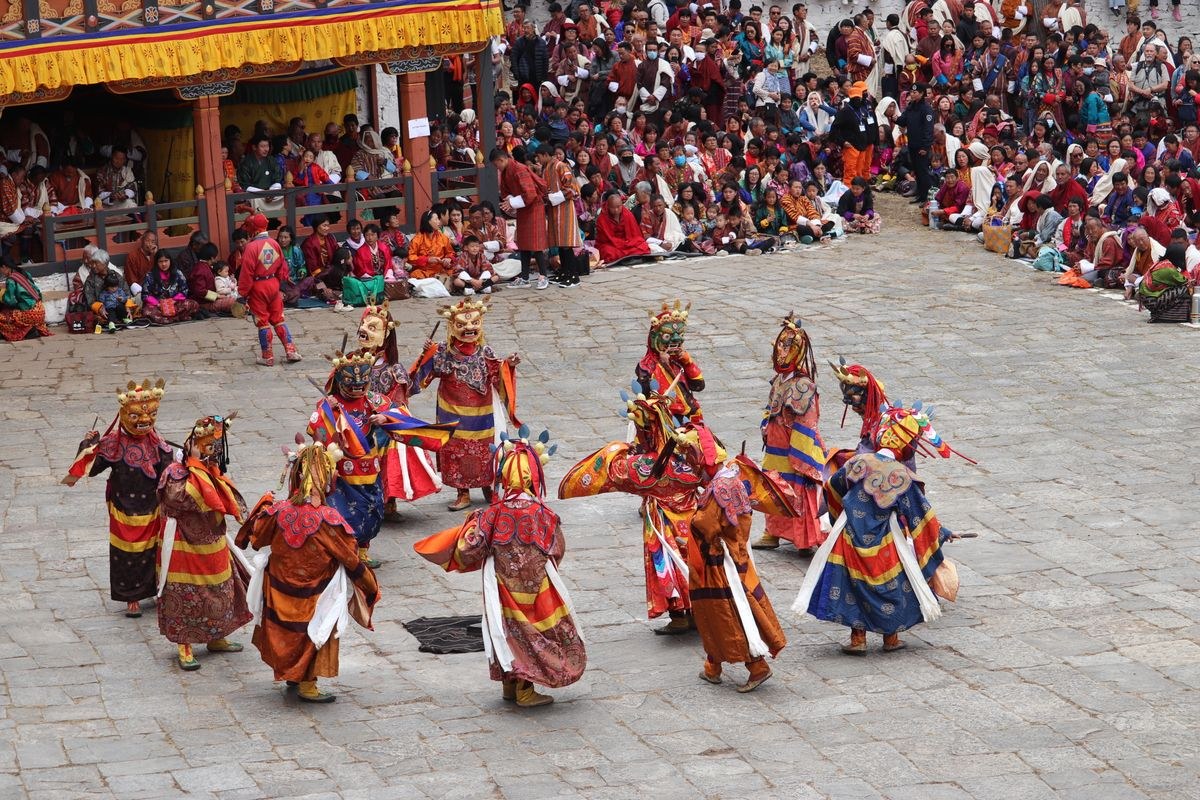
Bhutan's religious festivals, commonly known as Tshechus,
are among the most fascinating ways to experience the country's living culture.
Monasteries and dzongs come alive with traditional masked
dances, ceremonies and local communities dressed in their finest clothes.
Popular festivals can attract significant visitor numbers,
however.
So if a festival is important to you, don't book flights
first and think about accommodation later.
Plan the entire journey around the confirmed festival dates.
Is Bhutan Good for Indian Families?
Very much so.
Bhutan works particularly well for families who appreciate
nature, culture and meaningful experiences rather than amusement-heavy
holidays.
Children can enjoy:
- Mountain
scenery
- Short
nature walks
- Traditional
architecture
- Rivers
- Farms
and villages
- Cultural
experiences
- Local
food exploration
For families with younger children, however, we would
carefully consider whether everyone should attempt the complete Tiger's Nest
hike.
Build the itinerary around your family—not around what
social media says you must do.
What About Senior Citizens?
Bhutan can be a wonderful destination for parents and senior
travellers, but thoughtful planning becomes especially important.
Mountain roads, altitude, stairs at monasteries and long
sightseeing days can become tiring.
We generally suggest:
- Fewer
hotel changes
- Comfortable
vehicles
- Quality
hotels
- Sensible
driving hours
- Regular
breaks
- Avoiding
unnecessarily packed itineraries
- Discussing
mobility limitations before travel
- Checking
altitude and medical considerations with an appropriate healthcare
professional when relevant
Tiger's Nest should never be treated as compulsory.
Someone who doesn't complete the hike hasn't somehow failed
to experience Bhutan.
There is much more to the country.
What Is Bhutanese Food Like?


Bhutanese cuisine is warming, distinctive and often generous
with chillies and cheese.
One of the best-known dishes is Ema Datshi,
traditionally prepared with chillies and cheese.
You'll also encounter rice, vegetables, dumplings and
various meat preparations.
For Indian travellers worried about food, hotels and
restaurants in major tourist destinations generally cater to international
guests, and Indian-style options may be available in many tourism-oriented
areas.
Vegetarian travellers should communicate preferences clearly
when arranging meals.
And we'd encourage you to try some Bhutanese food.
You travelled all the way to Bhutan—give your taste buds a
holiday too.
Where Should You Stay in Bhutan?
This is one area where we recommend being selective.
Bhutan has everything from simple accommodation to beautiful
premium and luxury properties.
For HolidayAlong guests, we prefer focusing on well-reviewed,
comfortable hotels with dependable hospitality rather than selecting a property
simply to reduce the package price.
When selecting hotels, look at:
- Actual
room quality
- Heating
arrangements during colder months
- Location
- Views
- Service
standards
- Food
quality
- Accessibility
- Recent
guest feedback
For premium travellers, Bhutan has some exceptional
properties where the hotel itself becomes part of the experience.
A beautiful valley view in the morning can sometimes be
worth more than another sightseeing stop.
Road Travel in Bhutan: Don't Trust Distance Alone
This catches many first-time visitors by surprise.
A distance that looks short on Google Maps may take
considerably longer than expected because Bhutan's roads pass through
mountainous terrain.
That's why we strongly recommend avoiding itineraries that
try to cover too many destinations.
Three hours sitting in a vehicle is still three hours of
your holiday.
We would rather give you an afternoon to enjoy Punakha than
add another town simply because technically it can fit on paper.
What Should You Pack for Bhutan?
Pack according to the season and the altitude of the places
you're visiting.
A few useful essentials include:
- Comfortable
walking shoes
- Layered
clothing
- A warm
jacket during colder periods
- Rain
protection during wetter months
- Sunscreen
- Sunglasses
- Personal
medicines
- Small
day bag
- Reusable
water bottle
- Power
bank
- Appropriate
clothing for monasteries and religious sites
For Tiger's Nest, good walking shoes matter far more than
fashionable ones.
Bhutan Etiquette: A Little Respect Goes a Long Way
Bhutanese society has a deep connection with Buddhism,
monasteries and traditional culture.
When visiting religious sites:
Dress respectfully.
Follow your guide's instructions.
Check whether photography is permitted.
Don't photograph religious ceremonies where photography is
restricted.
Keep conversations quiet inside temples.
Don't touch sacred objects without permission.
When you're unsure, ask.
Nobody expects a visitor to understand every cultural
custom.
Respect and curiosity are enough.
Is Bhutan a Honeymoon Destination?
Definitely—but perhaps not in the way the Maldives is.
Bhutan is romantic because of its atmosphere.
Beautiful valleys, boutique hotels, mountain drives,
peaceful monasteries, candlelit dinners and cold evenings together can make it
an excellent choice for couples who want experiences rather than simply a beach
resort.
A premium honeymoon can also include carefully selected
resorts, spa experiences, private dining and slower sightseeing.
For couples who enjoy nature and culture, Bhutan can be
incredibly special.
Bhutan for Luxury Travellers
Bhutan and luxury travel work surprisingly well together.
But luxury here isn't necessarily about flashy shopping or
nightlife.
It's more often about:
privacy, exceptional hospitality, beautiful architecture,
remarkable locations, wellness, personalized service and access to nature.
Some of Bhutan's premium resorts are destinations in
themselves.
For a luxury itinerary, we'd rather combine fewer
destinations with exceptional hotels and experiences than rush through the
country changing hotels every night.
Should You Book Bhutan Yourself or Through a Travel Expert?
You can certainly research and arrange many elements
independently.
But Bhutan requires more coordination than simply booking a
hotel and arriving.
Depending on your nationality, route and itinerary, there
may be entry formalities, tourism requirements, guides, transportation and
local arrangements to consider.
A travel specialist becomes particularly useful for:
- Families
- Senior
travellers
- Honeymooners
- Premium
holidays
- Festival
travel
- Multi-destination
itineraries
- Special
hotel requirements
- Travelers
entering or exiting by different routes
The value isn't simply making reservations.
It's making sure all the pieces work together.
How HolidayAlong Plans Bhutan Differently
At HolidayAlong, Bhutan is not just another
destination on a long list of packages.
It's a destination we believe needs to be planned carefully.
Before designing your itinerary, we'd rather understand:
Who is traveling?
Is this your first Himalayan holiday?
Are children or parents joining you?
Are you comfortable with long drives?
Do you want to attempt Tiger's Nest?
Do you prefer premium hotels or would you rather spend more
on experiences?
Are you interested in culture, photography, spirituality,
nature or simply relaxation?
Those answers change the itinerary.
And they should.
Because two families visiting Bhutan on exactly the same
dates don't necessarily need exactly the same holiday.
Frequently Asked Questions About Bhutan in 2026
Do Indian citizens need a visa for Bhutan?
Indian citizens generally don't require a conventional
tourist visa for Bhutan, but entry permits and applicable travel formalities
are required. Travellers should verify current 2026 requirements through
official channels before departure.
How many days are enough for Bhutan?
Around 6–8 days is excellent for a first journey covering
destinations such as Thimphu, Punakha and Paro at a comfortable pace.
What is the best time to visit Bhutan?
Spring from March to May and autumn from September to
November are among the most popular periods. Winter offers a quieter experience
and beautiful clear days, while summer brings greener landscapes and seasonal
rain.
Is Bhutan expensive for Indian tourists?
Bhutan can suit different budgets, although quality
accommodation, transportation, tourism fees and experiences influence the final
cost. Comparing inclusions is more useful than comparing package prices alone.
Is Bhutan suitable for families?
Yes. Bhutan is particularly suitable for families interested
in nature, culture and relaxed sightseeing. The itinerary should be adjusted
for children or elderly travellers where required.
Can senior citizens visit Bhutan?
Yes. Many senior travellers enjoy Bhutan. However, road
travel, stairs, altitude and walking requirements should be considered when
planning the itinerary.
Is the Tiger's Nest hike compulsory?
No. Tiger's Nest is Bhutan's most famous attraction, but
completing the hike is entirely optional. Bhutan offers numerous cultural and
scenic experiences for travellers who don't wish to attempt it.
Is vegetarian food available in Bhutan?
Yes. Vegetarian meals are widely possible, particularly in
tourism-focused hotels and restaurants. Dietary preferences should still be
communicated in advance.
Is Bhutan good for a honeymoon?
Yes. Bhutan is ideal for couples looking for mountains,
boutique hotels, culture, wellness and peaceful experiences rather than a
conventional beach holiday.
Can Indians travel to Bhutan by road?
Yes, Indian travellers can enter through designated
land-border routes subject to current entry rules and documentation
requirements. Always verify the latest regulations before planning a road
journey.
Bhutan Isn't a Destination You Need to Rush
There's a temptation when planning any international holiday
to ask:
“What else can we add?”
With Bhutan, we'd suggest asking the opposite.
“What can we remove so we have more time to enjoy what's
already there?”
Don't just photograph Punakha Dzong and leave.
Walk around it.
Don't spend every mountain drive looking at your phone.
Look outside.
Don't worry if you don't finish Tiger's Nest faster than
everyone else.
Stop when you need to. Turn around and look at the valley.
And don't fill every free evening with another sightseeing
point.
Walk through Paro.
Find a café.
Talk to your guide.
Watch the mountains disappear as evening arrives.
Because somewhere between the monasteries, winding roads,
prayer flags and Himalayan valleys, Bhutan has a habit of reminding you that travel
doesn't always have to be about doing more.
Sometimes the most memorable journeys are the ones that give
you permission to slow down.
That's the Bhutan we want our guests to experience at HolidayAlong.
Thoughtfully curated. Comfortably paced. Beautifully
Bhutan.